Electrical Tape
PVC vs Rubber Electrical Tape: Choosing the Right Adhesive System
PVC and rubber electrical tape differ in backing, adhesive and construction, not just price. Compare unwind force, low-temperature adhesion, ageing and abrasion before you specify.
Most electrical tape arrives on the same 19 mm roll and looks, to a buyer, interchangeable. It is not. The backing and the adhesive are two separate engineering choices, and they fail in completely different ways. Choosing between PVC and a rubber-based tape is really a question about temperature, movement and how the tape is applied.
We produce both families. This is not an argument for one over the other. It is a map of where each construction earns its place, and where a buyer who chose on price alone ends up with callouts.
Backing: PVC film versus rubber and fabric
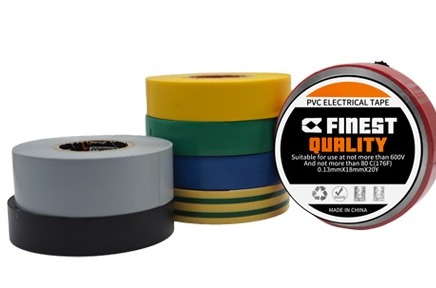
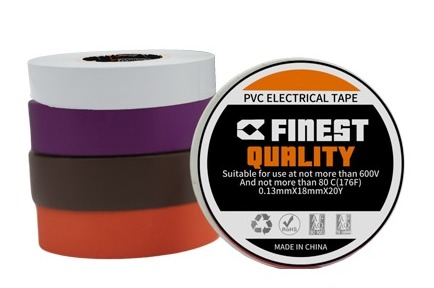
PVC electrical tape is a plasticised PVC film, cast or calendered. It stretches, conforms tightly, resists moisture and abrasion, and takes a clean cut. It is thin, typically 0.13 mm to 0.25 mm, and is the default for harness wrapping, colour coding and general insulation.
Rubber and synthetic-rubber backings behave differently. A rubber-resin tape is softer, thicker and more conformable around awkward geometry. A fabric-backed rubber tape, the self-amalgamating and friction types, stretches and then bonds to itself under tension, forming a void-free wrap that resists water ingress on cable joints and terminations.
The distinction matters because PVC is a film that relies on its wrap geometry for sealing, while rubber can fuse into a single mass. If your application is a low-voltage harness, PVC wins on cost and cleanliness. If it is a wet splice that must exclude water, a rubber or mastic tape does something PVC simply cannot.
Adhesive systems: rubber-resin versus acrylic
On a PVC backing you will meet two adhesive families.
- Rubber-resin — high initial tack, low cost, excellent immediate grab. It softens in heat, can ooze at the edges, and ages faster. Good for a quick wrap, poor for a joint that sits in a hot panel for years.
- Acrylic — lower initial tack and slower to build, but far better ageing, heat resistance and UV stability. It is the correct choice where the tape will be exposed or long-lived.
The trade-off shows up in the freezer and on the rooftop, not in the meeting. A rubber-resin tape that grabs beautifully on a warm bench may go brittle and lift after a winter outdoors. An acrylic tape that feels slow and under-tacky on day one is still holding in year three.
Unwind force: the manual versus machine divide
Unwind force is where choosing an adhesive system has immediate production consequences. A rubber-resin tape typically unwinds with a light, eager feel, pleasant by hand, but on some semi-automatic winders that low tension means the tape can flag or wander before it contacts the substrate.
Higher-tack or thicker adhesive systems demand more pull. By hand, that becomes fatigue and inconsistent stretch over a long shift. On a machine, it becomes a parameter you tune: the dispenser has an unwind-tension window, and a tape outside that window jams, stretches or snaps. When you trial a new construction, run it through the actual dispenser, not a hand pull. The figures on the datasheet tell you the range; the machine tells you whether your tape sits inside it.
Adhesion retention, ageing and UV
Adhesive performance is a curve, not a number. Rubber-resin systems build tack fast at room temperature but lose conformability and grab as the substrate cools. Acrylic systems start slower and hold their adhesion down to lower temperatures. Below roughly 5 °C, the difference stops being subtle and starts showing up as tails lifting off cable bundles within hours.
If your assembly is built in an unheated warehouse in winter, specify for the surface temperature you actually wrap on, not the temperature of your office. That single correction prevents more returns than any formulation change.
On a loom, tape meets vibration, chafe and sharp metal edges. PVC film resists abrasion well and wipes clean; rubber backings abrade and pick up dust but damp vibration better. Outdoors, UV shortens the useful life of rubber-resin systems noticeably and stains some films, while acrylic on PVC survives far longer.
There is no universal winner here. There is only the question of what the tape touches every day.
When rubber or fabric genuinely wins
Reach for a rubber or fabric tape when:
- The joint must exclude water or moisture vapour.
- The geometry is irregular enough that a thin film would bridge or crease.
- You need the tape to amalgamate into a solid wrap rather than sit as distinct layers.
For everything else, coding, bundling, general insulation and machine wrapping, PVC remains the practical default because it is thin, printable, inexpensive and predictable.
Getting the specification right
Tell the supplier the application, the wrap temperature, the environment and whether the tape is applied by hand or machine. Those four facts decide the backing and the adhesive before price enters the conversation. We produce grades built to UL 510 and CSA C22.2 No.197 requirements and confirm the currently listed scope in writing before you design one into a certified assembly. Browse the electrical tape range, check the questions to raise in our UL 510 guide, and request an FOB quote when you are ready.