
Masking Tape
Masking Tape Temperature Guide: 60 °C, 90 °C and 160 °C Explained
Masking tape temperature ratings are ceilings, not promises. This guide explains the 60, 90 and 160 degree Celsius classes, what happens above the rating, and how to remove tape cleanly.
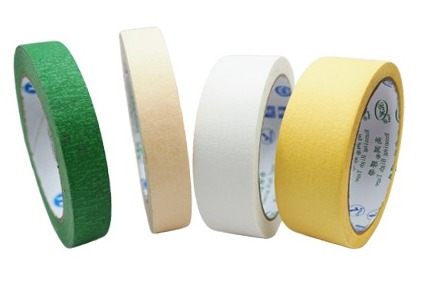
Masking tape temperature ratings are among the most misread figures in the industry. The number on the carton is a ceiling under specified conditions, not a promise that the tape leaves a clean surface at any temperature below it. Buyers who read it as a guarantee end up with baked-on adhesive and stained parts.
This guide walks through the three common classes, what each is actually for, and how the adhesive behaves just above the rating, because that is where the damage happens.
Backing first: crepe paper versus washi
Conventional masking tape uses crepe paper, which stretches and conforms and tears cleanly by hand. It is the workhorse for painting and general masking. Washi paper is thinner, smoother and more heat-tolerant, with finer edge quality, which is why it dominates in fine-art masking and delicate surface work.
The backing sets the temperature ceiling for the bond. Crepe paper begins to dry, shrink and embrittle at high temperature; washi holds its shape longer. But the backing is only half the story. The adhesive decides how cleanly the tape releases, and that is where the ratings bite.
The 60 °C class: general purpose
A 60 °C tape is a natural general-purpose masking tape. It handles room-temperature painting, bundling, labelling and short indoor masking. Its adhesive is typically a rubber-resin or water-based system with good initial tack and modest heat tolerance.
Keep it within its window. Left in a warm car, taped to a sun-facing panel, or used through a low-temperature bake, it will begin to soften. The failure mode is adhesive transfer, a sticky residue left on the surface when the tape is pulled.
The 90 °C class: the industrial middle
A 90 °C tape suits powder coating pre-treatment, longer indoor masking, and processes with moderate heat. It usually uses a stronger adhesive system and a denser backing, giving it better hold and cleaner release than the general-purpose grade.
This is the grade most industrial buyers should start from when the process involves heat but not baking or curing ovens. The trade-off is higher unwind force and a firmer feel, still workable by hand, but noticeably less forgiving than a 60 °C tape.
The 160 °C class: high-temperature masking
A 160 °C tape is built for bake and cure cycles, including many paint and powder processes. Its backing and adhesive are chosen to hold through high temperature and still release without leaving a hard, cross-linked residue. It is firmer again, and its tack is often lower, because a low-tack, heat-stable adhesive releases more cleanly than a soft, high-tack one.
This is the class where the rating most matters and is most often exceeded. A tape rated to 160 °C that is left in the oven far longer than intended does not simply get hotter. Its adhesive cross-links, and cross-linked adhesive does not come off cleanly.
Above the rating: what actually happens
Two distinct failures appear when the temperature or the dwell exceeds the rating:
- Transfer — the adhesive softens, sticks to the surface and separates from the backing, leaving a tacky film. Common when a low-rated tape is overheated.
- Cross-linking and hard-line staining — the adhesive cures onto the surface, forming a hard line that solvents may not remove. Common when a high-rated tape is held far too long.
The second is worse, because it is often permanent. This is why using a higher-rated tape and leaving it longer is a trap: the rating buys time, not unlimited time.
Water-based adhesives are lower in odour and cost. Solvent-based adhesives generally offer better heat resistance and cleaner high-temperature release, which is why the higher temperature classes tend to use them. If your process runs hot, the adhesive technology behind the rating matters more than the label.
Sunlight ages masking tape and shortens the usable dwell. A tape that removes cleanly after a week indoors may stain after two days of direct sun. For outdoor masking, treat the stated window as an upper bound and remove earlier, not later.
Even a correctly rated tape can stain if it is pulled badly. Remove slowly, at a shallow 180-degree angle, close to the surface. A fast, steep pull increases peel force and shear, which encourages adhesive transfer. Let a hot part cool until it is warm rather than hot where the process allows, then remove in one steady motion.
Grade table
| Class | Typical backing | Adhesive | Typical use | Main risk |
|---|---|---|---|---|
| 60 °C | Crepe paper | Rubber-resin or water-based | Painting, labelling, short indoor masking | Transfer in warmth |
| 90 °C | Denser crepe paper | Stronger rubber or acrylic blend | Powder pre-treatment, longer indoor masking | Residue if over-dwelled |
| 160 °C | Heat-stable paper or washi | Solvent-based, heat-stable | Bake and cure cycles | Cross-linking and hard-line stain |
Read the table together with your process time, not just your peak temperature. Browse the masking tape range, review how residue forms on protected surfaces, and request an FOB quote stating your peak temperature and dwell so we match the grade to the cycle.