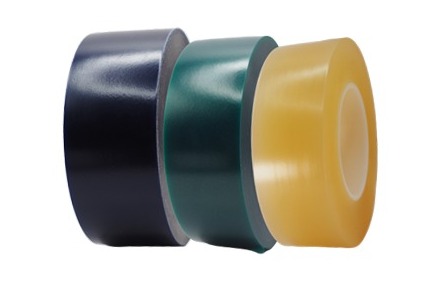
Protective Tape
Sand-Blast Masking for Golf Club Heads: A Practical Guide
Masking golf club heads for sand-blasting concentrates every surface-protection variable into one process. Cover media grit, translucency, edge lift, conformability and a trial method that works.
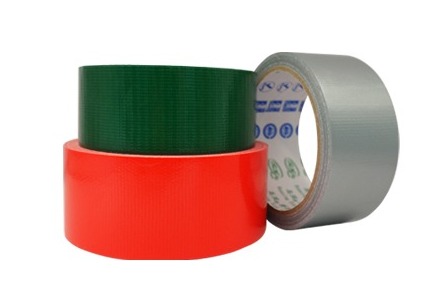
Masking a golf club head before sand-blasting is a small job with an outsized failure mode. The mask must survive media impact at the edges without lifting, hold tight around the hosel and grooves, and still release cleanly from a machined or forged surface. Get it wrong and you re-finish the whole head.
This is a niche application, but it concentrates every variable in surface protection into one process. The lessons apply wherever abrasive media meets a masked edge.
Why media type and grit decide everything
Sand-blasting is a shorthand; in practice the media might be aluminium oxide, glass bead, garnet or a plastic bead, at grits from coarse to fine. Coarser media at high pressure strike the mask edges with more energy. A film that survives a fine bead at low pressure can be cut or lifted by a coarse media stream at a shallow angle.
Ask the blasting shop for the media and the pressure before choosing a film. The mask specification is downstream of the blast specification.
Translucency: an operator feature, not a cosmetic one
A translucent film lets the operator see the register marks, the logo recess and the machined lines underneath. That visibility is what keeps the mask in the right place on a curved, irregular head. An opaque film forces guesswork, and guesswork produces masks applied slightly off, which produces rework.
This is one of the few cases where appearance directly serves function. Specify translucency when operators align masks by eye.
Edge lift under media impact
Edges are where masks fail. Media strikes the perimeter at an angle, lifts a lip, and the abrasive works underneath. Once that happens the blast reaches the protected surface and the part is scrap.
Two design levers reduce edge lift:
- Adhesion matched to the blast — enough tack that the edge resists lift, without so much that removal damages the finish.
- Film thickness and stiffness — a slightly thicker, firmer film resists edge curl better than a very thin, floppy one, provided it still conforms to the shape.
Crease the film into a corner and you have created a lift point before the blast even starts. Training and a smooth application technique matter as much as the film.
Thickness versus conformability around the hosel and grooves
The hosel is a tight radius; the grooves are fine and closely spaced. A thick film resists impact better but fights tight radiuses and fine detail. A thin film conforms beautifully but lifts at edges under heavy media.
The practical answer is to match thickness to the tightest feature you must mask. If the grooves must be protected, a thinner, more conformable film is the starting point, and you compensate for edge lift with application technique rather than with thickness.
Surface finish and dwell during long runs
A machined head presents a defined surface with visible tool marks. A forged head may be smoother in places and rougher in others, with a finish that varies across the part. Adhesion behaviour differs: a machined surface can be easier to seal, while a forged or shot-peened surface can trap adhesive in its texture and release less cleanly.
This is why a single film grade rarely suits every head. Trial the film on the exact surface finish you produce, not on a generic metal coupon.
In a production run, masks may sit on parts for hours or days between application and blasting. That dwell lets the adhesive build, and the bond can grow past the clean-release window, especially if the parts sit in a warm workshop. Keep the time between masking and blasting as short as the process allows, and if parts must wait, keep them cool and out of sunlight.
A trial method that answers the real question
- Select two or three film grades around your expected thickness and tack.
- Mask ten heads of each relevant finish, applied by your own operators.
- Run them through the actual blast media and pressure.
- Inspect for edge lift and media intrusion before removal.
- Remove under your normal dwell conditions and inspect for residue and finish damage.
- Score edge integrity and residue separately; a film can pass one and fail the other.
Run the trial on real parts, because a coupon will not reproduce the hosel radius or the groove pitch. Browse the protective film range, read our broader notes on preventing residue, and request an FOB quote with your media type, pressure and head finish so we start the trial on the right grade.